
The 3 Neural Adaptations That Drive ALL Strength Gains

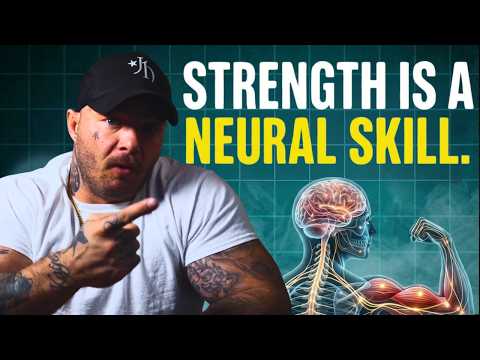
In this video, we explore the three crucial neural adaptations that facilitate strength gains. These adaptations play a pivotal role in how our body responds to resistance training and ultimately lead to improved muscular performance. The first adaptation discussed is motor learning, which enhances the efficiency of our movement patterns, allowing us to lift heavier weights more effectively. Next, we delve into the concept of increased motor unit recruitment, where the body becomes adept at activating more muscle fibers, significantly boosting power output and overall strength.
The third adaptation is neural synchronization, which emphasizes the importance of timing in muscle contractions. When muscles work together in a coordinated manner, they can produce greater force, particularly during high-intensity lifts. Understanding these neural adaptations empowers athletes and fitness enthusiasts to tailor their training approaches to maximize gains. By focusing on enhancing motor learning, recruiting more muscle fibers, and improving synchronization, anyone can achieve substantial progress in their strength training journey.1. Motor learning enhances efficiency of movement patterns.
- Increased motor unit recruitment boosts muscle power output.
- Neural synchronization improves timing of muscle contractions.
- Tailoring training can maximize strength gains.
- Understanding neural adaptations is key to effective training.
Subscribe to our newsletter
Lorem ipsum dolor sit amet, consectetur adipiscing elit. Suspendisse varius enim in eros elementum tristique.